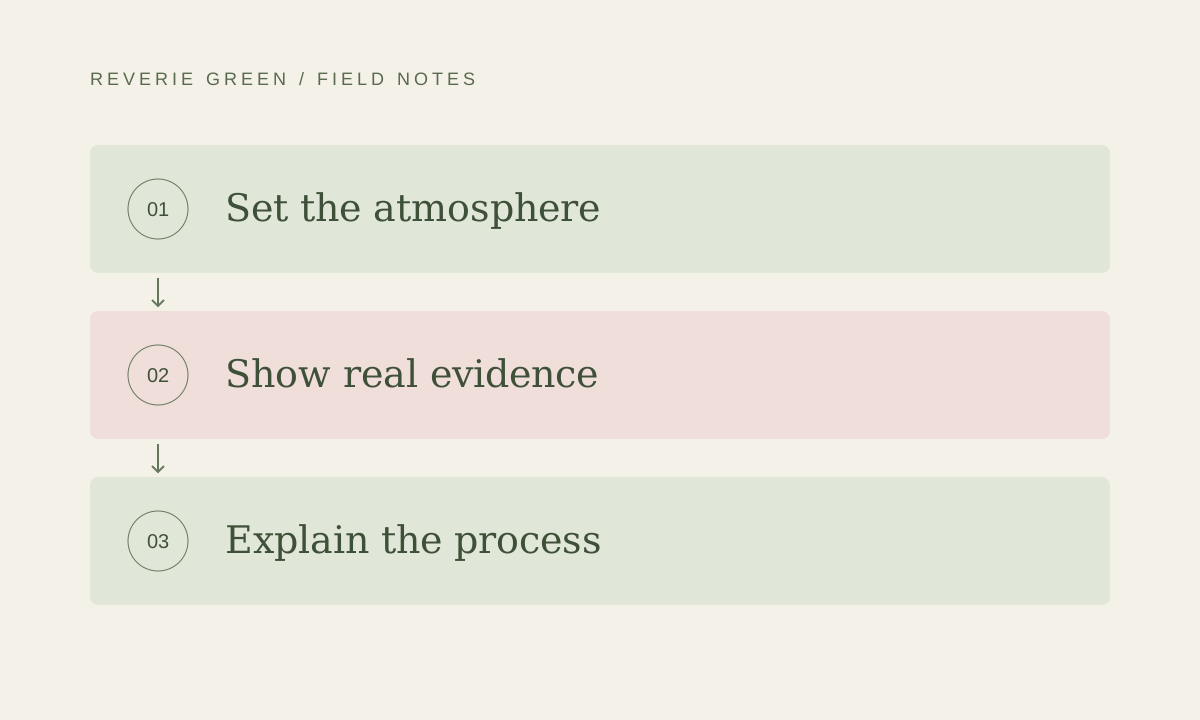
Start with conversations you already have
The best editorial brief may already be in your inbox. Prospective customers ask about timing, service boundaries, preparation and what happens after an inquiry. Collect those questions without including private customer details. Look for repeated uncertainties that a useful page could address.
Ask the team which questions are straightforward and which depend on a consultation. The first group can become direct answers. The second group can explain what affects the decision and what information the business needs before making a recommendation. That distinction keeps the content helpful and honest.
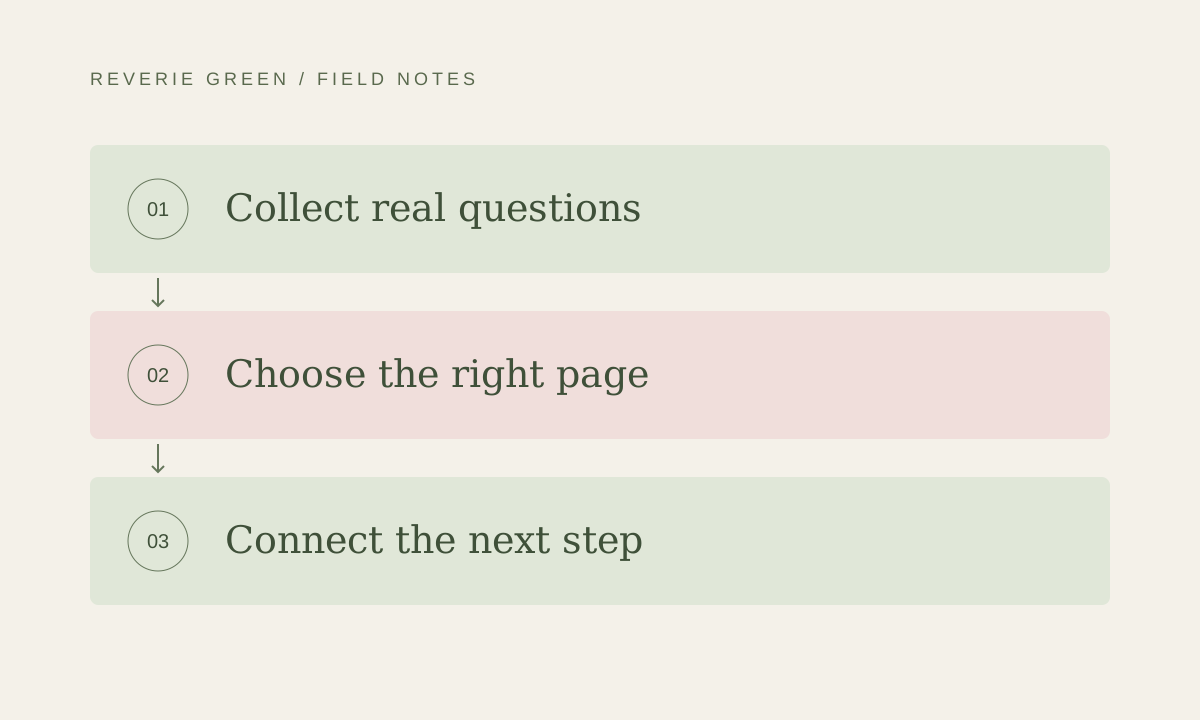
Choose the right home for each answer
Not every question needs a blog post. Pricing context may belong on a service page. Parking directions belong near the location details. An explanation of how to prepare for a project could make a useful article linked from the inquiry confirmation.
Build the commercial pages first so educational content has a relevant destination. Each article should support a recognizable reader need and offer a logical next step. If a proposed topic has no relationship to the work the business wants, it may not deserve production time.
Make local detail earn its place
A local reference is useful when it changes the advice. A contractor might explain the areas the team actually visits. A studio might describe arrival information for its location. A service business might clarify which appointments can happen remotely and which require an on-site visit.
Avoid making separate pages that repeat the same copy with different place names. Ask what genuinely differs for someone in that area. If the answer is nothing, a clear service-area explanation may serve the visitor better than another near-duplicate page.
Create a small editorial sequence
Choose three questions for the next month and assign each an owner. One article might explain how to choose a service, another how to prepare and another what to expect afterward. Gather any photographs and subject-matter review before writing begins.
Set a pace the business can maintain. A useful article with clear examples and accurate details is a better foundation than a rushed schedule filled with general advice. Leave room to improve existing pages when customer questions reveal that something important is missing.
Review whether the content helps
Ask the team whether they can send the article to a real prospective customer. That is a practical quality check. If the piece does not answer the question clearly enough to be useful in a conversation, revise it before adding more topics.
After publication, look at the questions people still ask and whether readers can find the next relevant page. Analytics can add context, but a low-volume local article may still save time or support an important decision. Judge the content against its intended job.
What to carry forward
- Use real customer questions as editorial briefs.
- Put answers on the page where they are most useful.
- Link educational articles to a relevant service or next step.