A spa website has to create calm and reduce uncertainty
A spa is selling more than an appointment. It is selling relief, care, confidence, privacy, and the expectation that someone has considered every detail. The website begins that experience before a guest enters the building. When the page feels hurried, generic, or difficult to navigate, the promise of the business and the digital experience begin to disagree. Strong spa website design closes that gap with generous pacing, legible service choices, intentional imagery, and a booking path that never asks the visitor to solve the business for themselves.
Calm is not the absence of information. A prospective guest may need to understand the difference between treatments, decide whether a provider is a good fit, confirm contraindications, compare session lengths, locate parking, purchase a gift card, or find an appointment before a specific date. The design should make those practical details feel composed. Thoughtful hierarchy lets the emotional and operational sides of the spa support each other instead of competing for attention.
Service architecture should reflect the way guests choose
Many spa websites inherit the structure of a booking platform: a long list of services, abbreviations, durations, and prices. That may work after someone knows exactly what they want, but it is not an ideal first conversation. The public website can organize treatments around recognizable needs such as relaxation, skin renewal, pain relief, event preparation, recovery, couples experiences, or ongoing care. From there, focused service pages can explain the treatment, who it is for, what the experience includes, and what a guest should do next.
This architecture also creates better search opportunities. A single page labeled services cannot fully answer searches for a facial in Columbia, a couples massage near Baltimore, a Maryland day spa gift card, or a med spa consultation in Howard County. Distinct, substantial pages give each important offer a stable destination. They also create natural places for internal links from related articles, provider biographies, frequently asked questions, and local pages.
Local SEO begins with useful local confidence
People often search for spa services close to a moment of action. They may be comparing options from Columbia, Ellicott City, Baltimore, Annapolis, Bethesda, Silver Spring, or Frederick while checking travel time, availability, atmosphere, and reviews. A useful local page does more than repeat a city name. It confirms where the spa is located, the areas it naturally serves, what makes the experience distinctive, and what a first-time guest should know before choosing.
Consistent organization details, a clear address, accurate hours, descriptive page titles, crawlable contact information, and a well-maintained Google Business Profile form the foundation. The website can deepen those signals with neighborhood context, parking guidance, local partnerships, event offerings, and service pages that match the language guests actually use. The goal is not to manufacture local relevance. It is to make real relevance easy for both people and search systems to understand.
Booking technology should stay connected to the brand
Mindbody, Vagaro, Boulevard, Fresha, Square, and other booking systems can solve valuable operational problems, but the handoff should not feel like leaving the spa entirely. The website needs to prepare the guest before that transition with the right service detail, provider context, policies, and expectations. Where the platform allows it, a thoughtful integration can keep search, filtering, or appointment selection visually and behaviorally closer to the branded experience.
The booking path should also account for people who are not ready to select a treatment immediately. A consultation, guided inquiry, quiz, phone option, or concierge-style recommendation can prevent uncertainty from becoming abandonment. For higher-consideration treatments, the best conversion may be a qualified conversation rather than an instant appointment. Good spa web development respects both the operational system and the emotional state of the visitor.
Trust belongs beside the decision it supports
Guests should not have to hunt for the information that makes a treatment feel safe and appropriate. Provider credentials, treatment boundaries, preparation notes, accessibility details, cancellation policies, sanitation practices, and realistic expectations should appear where they help a decision. This is especially important for med spas and advanced esthetics, where a polished surface cannot replace accurate education and responsible consultation language.
A new company should never manufacture testimonials, awards, or outcomes. Credibility can come from a clear process, real team information, thoughtful photography, complete service explanations, professional policies, and precise contact details. Search engines and AI systems also benefit from this clarity because the visible page contains the entities, services, locations, and relationships needed to interpret the business without relying on vague claims.
Performance is part of the luxury experience
Spa websites are often image heavy, which makes performance discipline essential. Oversized photography, autoplay video, multiple font files, and third-party booking scripts can delay the moment when a visitor can understand or act. Responsive image formats, stable media dimensions, intentional loading order, efficient components, and restrained motion preserve the visual atmosphere without asking a phone to carry unnecessary weight.
Core Web Vitals are useful diagnostics, but the human standard is simpler: the page should feel ready. The headline should not jump, the booking control should not move while someone reaches for it, and the first meaningful image should arrive quickly on a cellular connection. Reverie Green treats performance as part of art direction because elegance is difficult to believe when the interface feels fragile.
Content can support both recurring demand and seasonal moments
A durable spa content system starts with questions guests already ask. Articles can explain how to choose a facial, what to expect from a first massage, when to schedule event preparation, how memberships work, or how gift cards can be used. Service pages remain the commercial center, while educational posts create context and link readers toward the right treatment or consultation. This is more useful than publishing broad wellness content with no connection to the actual business.
Seasonal landing pages can support Mother's Day, wedding preparation, winter skin, corporate gifting, or a membership launch without rebuilding the entire site. Paid social and search campaigns should lead to focused pages that continue the promise of the ad, answer the next objections, and make the desired action obvious. The same visual system can feel consistent while the campaign language becomes specific to the moment.
Design for search, AI discovery, and real human decisions
There is no special schema that guarantees inclusion in AI answers. The durable work is still clear, accessible, indexable content supported by accurate structured data. Organization, service, article, image, and breadcrumb markup should describe what a visitor can actually see. Descriptive headings, useful summaries, meaningful alternative text, and direct answers make the page easier to interpret whether the reader arrives through Google, ChatGPT, a social post, or a referral.
The competitive advantage is not publishing the most pages. It is building the most coherent experience around the questions that matter. For a Maryland spa, that means a website that feels like care, explains the offer with precision, earns local confidence, and moves gracefully from inspiration to booking. When those elements work together, the site becomes part of the hospitality rather than a barrier before it.
What to carry forward
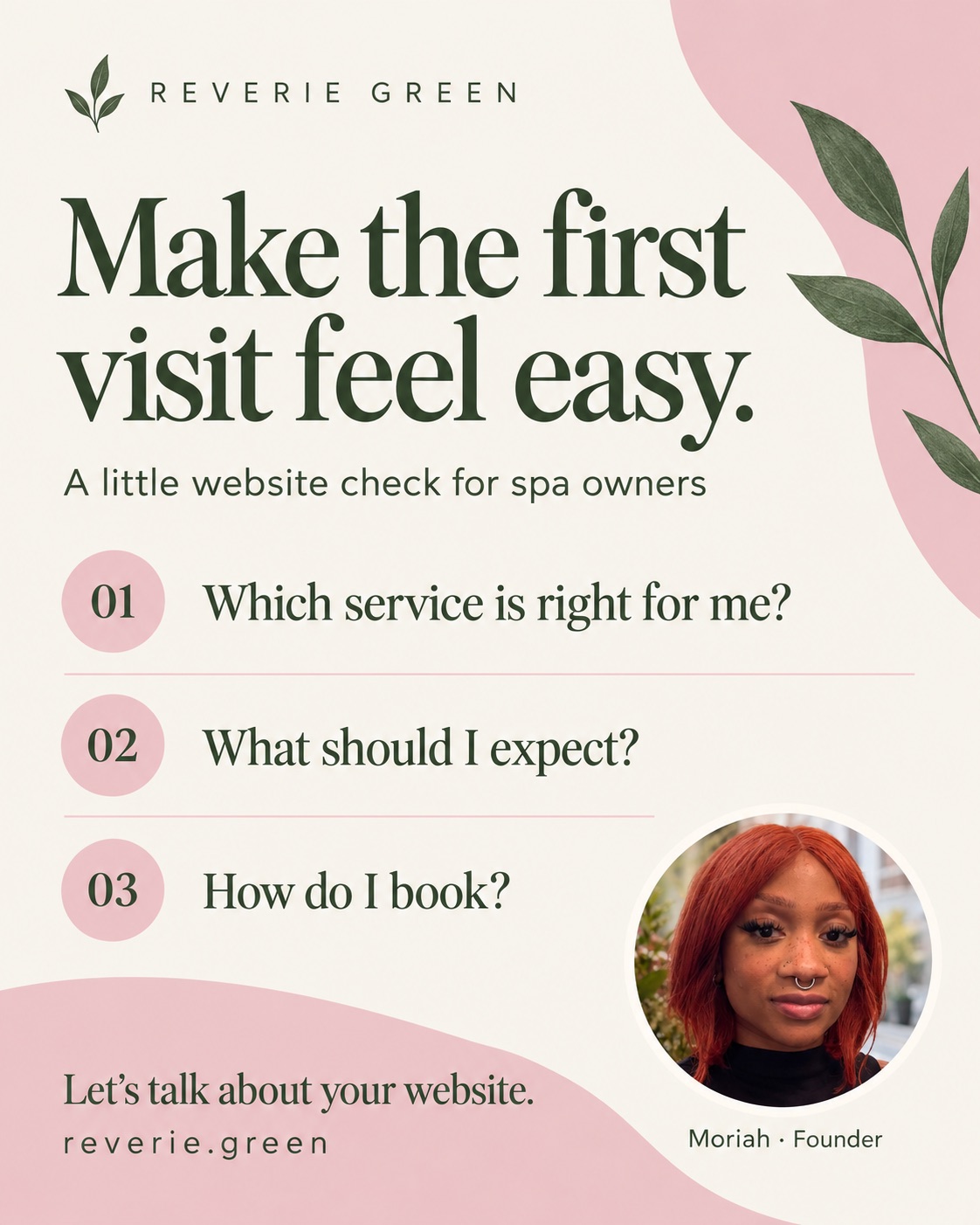
- Organize treatments around guest needs, then support them with focused service pages.
- Use local context, accurate organization details, and complete service information instead of thin city pages.
- Prepare guests before the booking-platform handoff and provide a guided path for uncertain visitors.
- Place credentials, policies, and treatment expectations beside the decisions they support.
- Treat image performance, layout stability, and mobile speed as part of the spa's premium promise.