Design and SEO should start in the same room
A service business website has to do more than look polished. It has to explain the offer clearly, load quickly, and help the right people find the business when they are searching with intent. That is why SEO-ready web design starts before the first page is built.
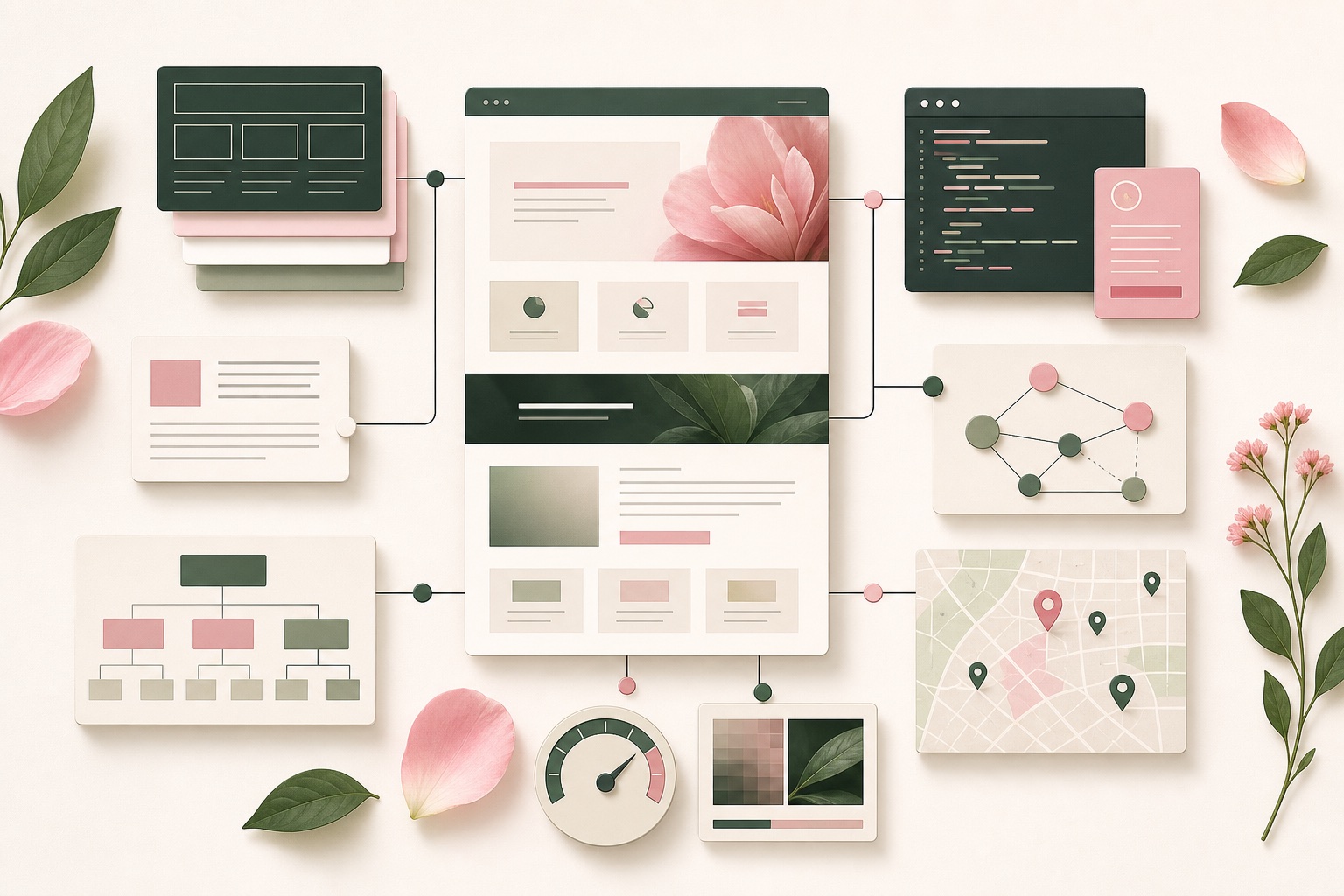
For Baltimore and Maryland service brands, the structure of the site matters as much as the visual direction. The homepage, service pages, location language, headings, internal links, image names, and metadata all work together to tell people and search engines what the business does and where it can help.
A search-friendly page has a clear job
Every important page should answer a specific question. A homepage can orient the visitor. A service page can explain one offer in detail. A location-aware page can make the local context clear. A journal post can answer a common decision-making question before someone reaches out.
This is where good design supports SEO instead of competing with it. Strong typography, section pacing, descriptive headings, and useful calls to action make the page easier to scan. The same clarity helps search engines understand the page topic without relying on keyword stuffing.
Performance is part of the first impression
A beautiful site loses trust when it feels slow. Image size, layout stability, responsive media, code weight, and font loading all affect how quickly the experience feels ready. Search visibility and user experience both benefit when performance is treated as a design constraint, not only a development task.
Reverie Green builds with speed in mind from the visual system forward: lighter image choices, cleaner page sections, responsive crops, and front-end patterns that are meant to keep the experience calm on phones as well as desktops.
Local SEO needs specificity, not filler
Local search signals should feel natural. A Baltimore business does not need to repeat the city name in every sentence. It needs clear service language, accurate contact information, a sensible page title, descriptive alt text, and content that reflects how real clients describe the problem they need solved.
The best local SEO content sounds human because it is useful. It explains who the service is for, what happens next, what makes the approach distinct, and why the location matters. That kind of specificity makes the site stronger for readers and easier for search engines to interpret.
What to carry forward
- Plan SEO before design mockups become final.
- Give every core page one clear search and conversion job.
- Use local language naturally, with accurate contact details and service-specific headings.
- Treat image optimization, page speed, and internal links as part of the design system.